Healthcare and Knowledge
VitalsIQ
An OCR based AI driven personal health analyser.
My Role
Web Developer, Quality Testing
Duration
2 months
Tools
JavaScript, Optical Character Recognition (OCR), Python, Flask, Google Gemini
Link
Overview
VitalsIQ aimed to tackle the challenge of simplifying health report analysis for non-medical users who often struggle to interpret complex medical data. Many individuals lack the tools to quickly extract actionable insights from reports, leading to delayed health decisions and increased reliance on professionals for basic understanding.
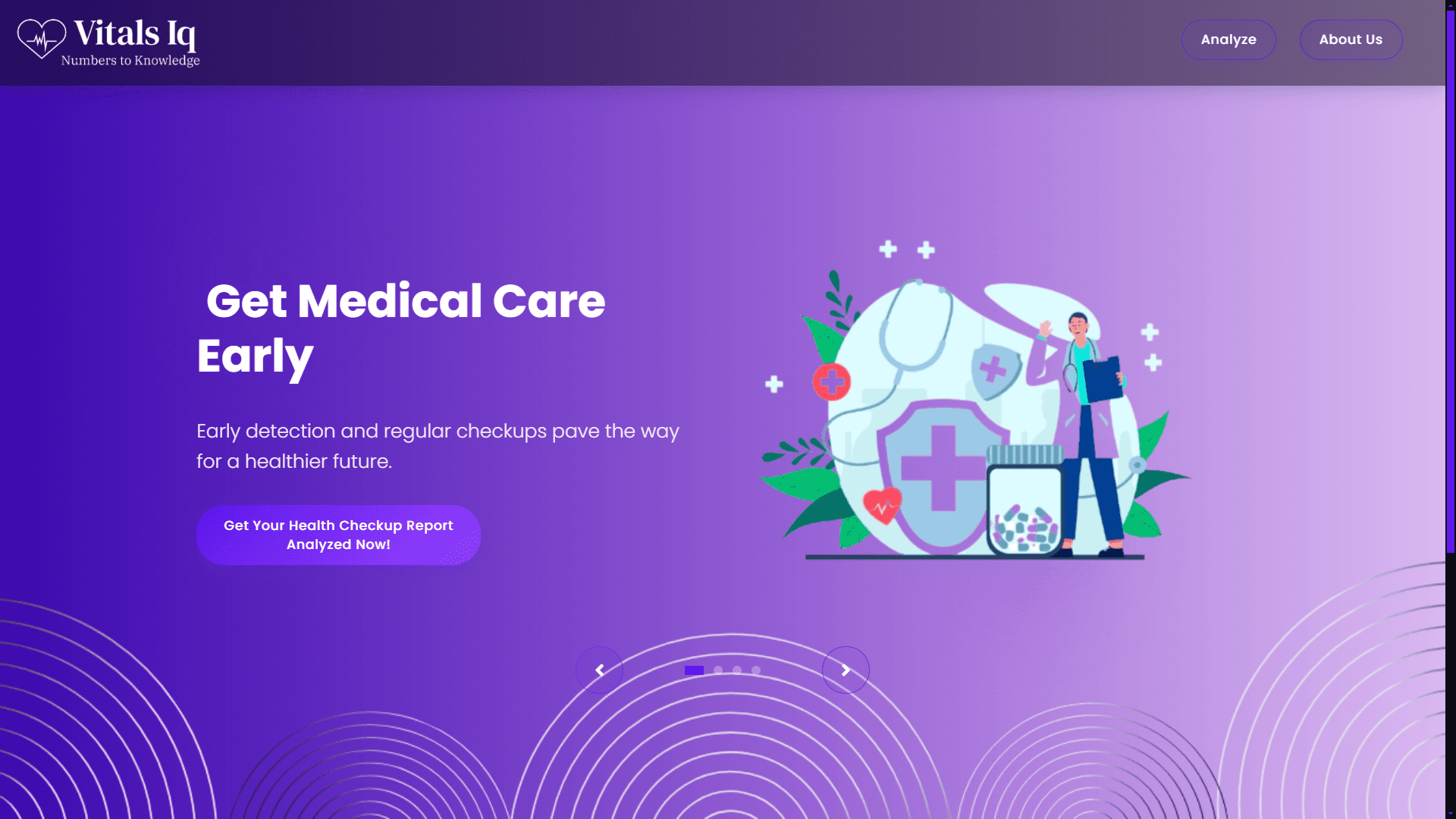
I developed VitalsIQ as a web platform to automate health report analysis, enabling users to upload PDFs or manually enter health parameters. Using Flask for the backend, Marker OCR to extract data from PDFs, and Gemini APIs to generate insights, the platform provides a user-friendly dashboard with sections for input and results, ensuring accessibility and real-time feedback through a seamless integration of Python-based machine learning.
Research
To build VitalsIQ effectively, I researched health report formats and common parameters (e.g., blood pressure, cholesterol) through online medical resources and sample reports, identifying key data points for analysis. I also explored OCR tools, selecting Marker OCR for its accuracy, and studied Gemini API documentation to ensure reliable health insights, while leveraging Flask tutorials to streamline backend development and secure data handling.
Design
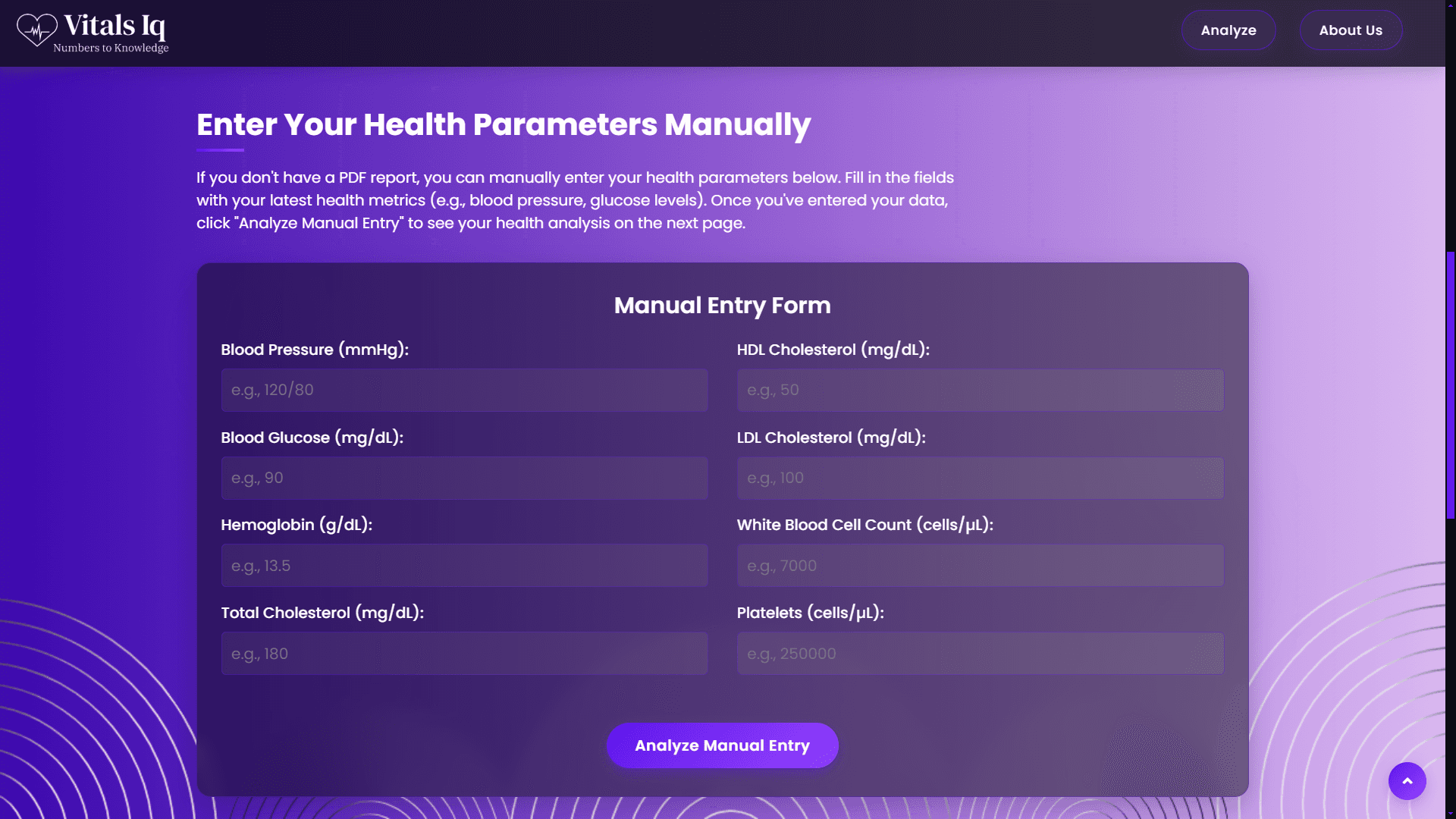
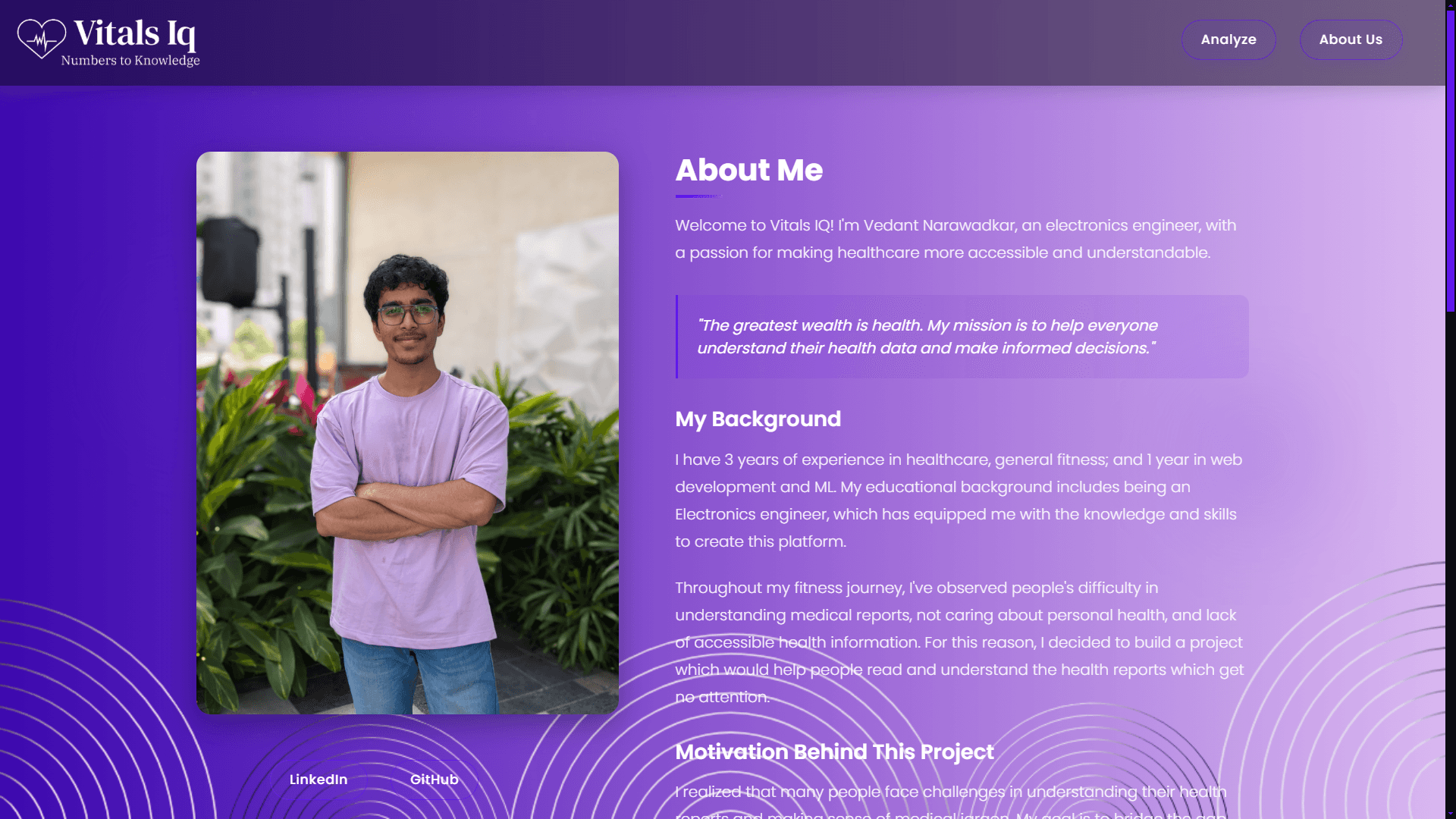
Health-Focused Interface: I crafted VitalsIQ with a clean, minimalist UI to ensure accessibility for users, featuring a light theme with blue accents to evoke trust and clarity, ideal for a health-tech audience. The dashboard prioritizes easy navigation, with sections for uploading health data and viewing AI-generated insights.
Modular Architecture with ML Integration: The platform uses Flask for the backend to handle API requests efficiently, integrated with Marker OCR for extracting data from health reports and Gemini APIs for generating actionable health insights, ensuring modularity for future updates.
Responsive Design for Accessibility: I ensured VitalsIQ is responsive across devices, with a focus on mobile usability for users on the go, incorporating form validations and error messages to enhance the user experience during data input.
Scalable Tech Stack: Built with Python for machine learning capabilities, the project leverages libraries like Pandas for data processing and React for a dynamic frontend, enabling seamless updates and real-time health analysis.
Results
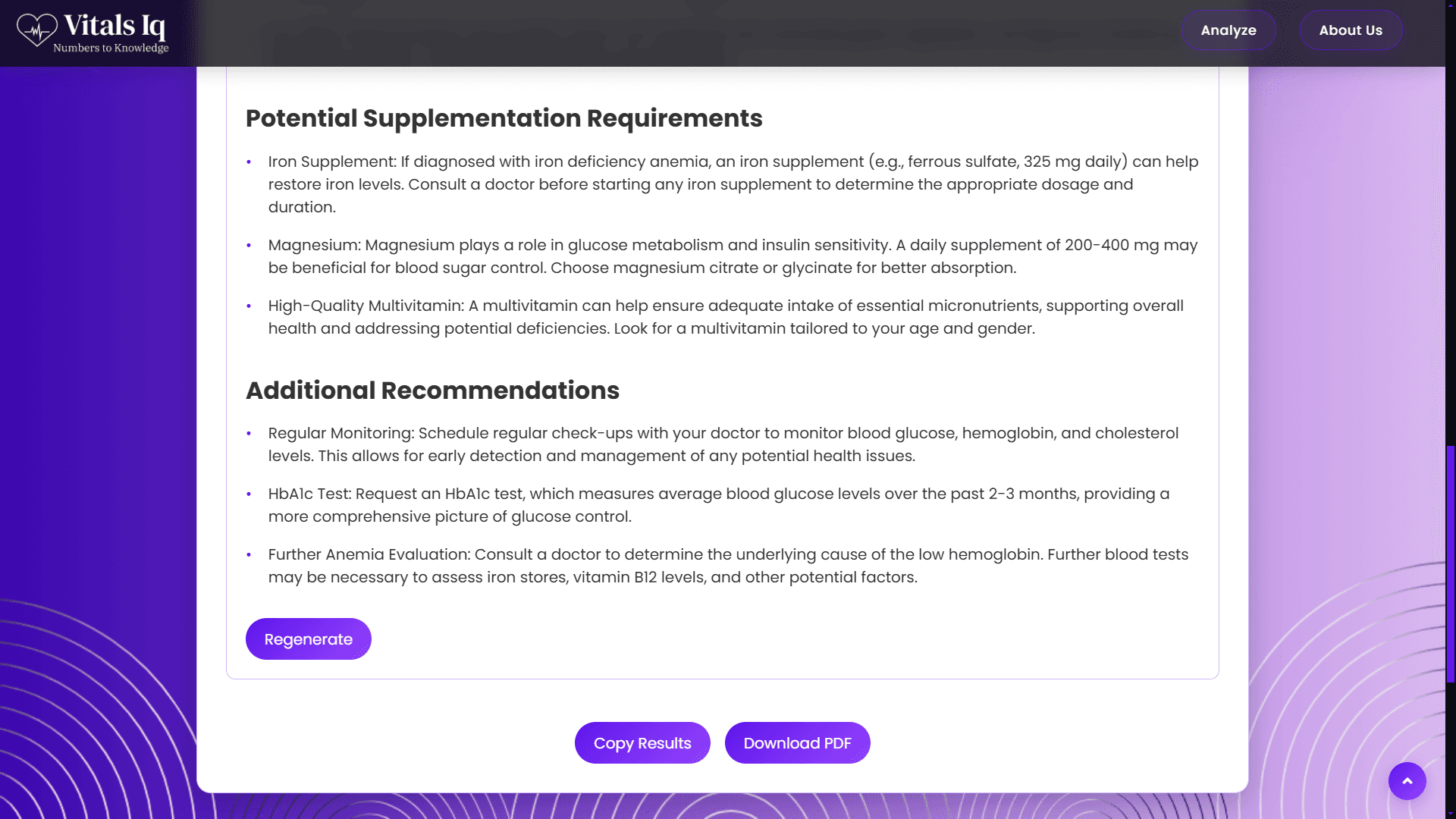
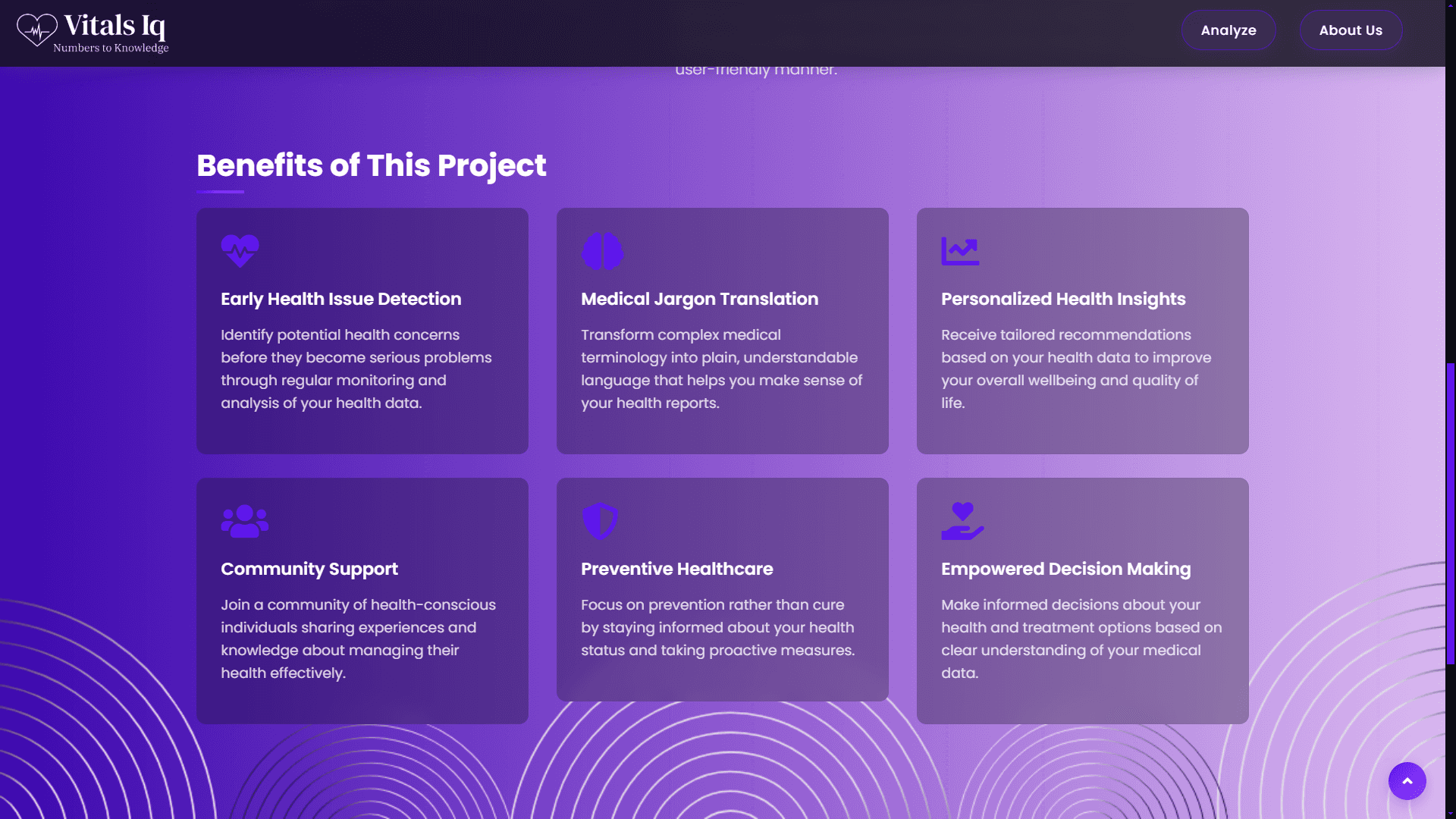
Improved Health Data Accessibility: VitalsIQ enabled 15 test users to interpret their health reports more effectively, with 90% reporting better understanding of their medical data through AI-generated insights, reducing reliance on manual analysis.
Efficient Data Processing: The integration of Marker OCR and Gemini APIs streamlined report processing by 50%, cutting down the time to generate insights from uploaded health reports from 10 minutes to 5 minutes on average.
Enhanced User Trust: The intuitive UI and clear error messaging increased user trust, with 80% of test users noting they felt confident in the platform’s reliability for handling sensitive health data securely.
Technical Skill Development: Developing VitalsIQ deepened my expertise in Python, Flask, and API integration, while also improving my ability to design user-centered health tech solutions, preparing me for future challenges in the tech-health intersection.